Equity Paybill 247247: How to Move Money from M-Pesa to Equity Bank
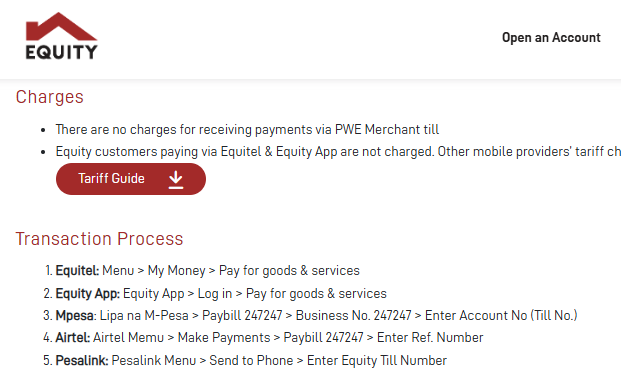
If you need to move money from M-Pesa to your Equity Bank account, the official equity paybill number is 247247. This service allows you to deposit funds into any Equity account in Kenya using your Safaricom line. Simply open your M-Pesa menu, select Lipa na M-Pesa, choose Paybill, enter 247247 as the business number, and use your full Equity Bank account number as the account name. The transaction is instant and available 24/7.
In Kenya, mobile money is the heartbeat of our daily lives. Whether you are a small business owner in Gikomba or a student at the University of Nairobi, you likely handle cash through M-Pesa. However, keeping all your money in a mobile wallet isn’t always the best strategy for saving or business management. That is where the equity paybill comes in.
Equity Bank has become a dominant force in the Kenyan banking sector by making it easy for the “common man” to access financial services. By using the Paybill service, they have bridged the gap between Safaricom’s massive network and the formal banking system. This connection is vital because it allows you to send money to your savings account, pay for a loan, or even top up your business account without ever visiting a physical branch or an ATM.
As of 2026, the integration between banks and telcos has become even smoother. According to reports from Business Daily Africa, millions of transactions happen every month through these digital channels. Knowing how to navigate this system safely is a basic skill for every Kenyan today.
What Is the Equity Paybill Number?
The equity paybill number is a unique digital address (247247) that Safaricom uses to route money from M-Pesa directly into the Equity Bank system. Think of it like a digital bridge. When you send money to this number, the Equity system catches it and looks at the “Account Number” you typed to know exactly which person’s bank account should receive the cash.
This system is not just for individual bank accounts. It is also used for a variety of other Equity services. Whether you are using a smartphone or an old-school feature phone (kabambe), the process remains the same.
| Key Information | Detail |
| Business Number | 247247 |
| Account Name | Your 12 or 13-digit Equity Bank Account Number |
| Service Provider | Safaricom (M-Pesa) |
| Recipient Bank | Equity Bank (Kenya) Ltd |
| Processing Time | Instant |
Why Kenyans Need the Equity Paybill
Moving money from your phone to your bank account is about more than just convenience; it is about financial security and growth. Here is why this service is essential for people across Kenya:
-
Saving for the Future: It is much harder to spend money when it is sitting in a bank account rather than your M-Pesa wallet.
-
Loan Repayments: Many Kenyans take out loans through EazzyLoan or other platforms. Using the equity paybill to clear these balances helps you maintain a good credit score.
-
Business Efficiency: Merchants can move their daily M-Pesa collections to the bank to earn interest or pay suppliers via EFT and RTGS.
-
Safety: Carrying large amounts of cash is risky. Depositing money through an agent and then transferring it to your bank keeps your funds secure.
-
Helping Family: You can easily send money to a parent’s or sibling’s Equity account from your phone, regardless of where they are in the country.
While managing your finances is a priority, finding balance in your personal life is just as important. For those looking to connect with like-minded professionals, the Best Online Dating Platform in kenya offers a modern way to meet new people.
Types of Transactions Using Equity Paybill 247247
The 247247 code is versatile. It is used for more than just simple deposits. Depending on what you put in the “Account Number” field, the system performs different tasks.
1. Deposits to Personal Accounts
This is the most common use. You enter your standard bank account number. The money reflects in your balance immediately. This is great for those who get paid via M-Pesa but want to keep their money in a formal bank.
2. Payments to Merchant Tills (Pay With Equity)
Equity has a “One Equity Till” system. Often, you can use the same 247247 paybill to pay a shopkeeper. In this case, the account number is the merchant’s specific Till Number provided by the bank.
3. Credit Card and Loan Payments
If you have an Equity credit card or an outstanding loan, you can use the paybill to make your monthly payments. You usually enter the credit card number or the loan account number as the account name.
How to Use the Equity Paybill Correctly
To ensure your money lands in the right place, you must follow a specific set of steps. Errors in the account number can lead to “wrongful deposits,” which take time and paperwork to reverse.
Checklist Before You Send:
-
Verify the Account Number: Equity accounts are usually 12 or 13 digits long. Ensure you haven’t missed a single number.
-
Check M-Pesa Balance: Remember that Safaricom charges a transaction fee. If you have exactly 1,000 shillings, you cannot send the full 1,000 because you need extra for the fee.
-
Confirm the Recipient Name: After entering your PIN, a pop-up (Hakikisha) will appear. It should show “EQUITY BANK” or your own name if you are sending to yourself.
Costs and Requirements in Kenya
In 2026, the charges for bank-to-mobile and mobile-to-bank transfers are regulated by the Central Bank of Kenya. While some smaller deposits might be free, most transactions carry a small fee that depends on the amount you are sending.
| Amount Range (Ksh) | M-Pesa to Bank Fee (Ksh) |
| 1 – 49 | Free |
| 50 – 100 | Free |
| 101 – 500 | 7 |
| 501 – 1,000 | 13 |
| 1,001 – 5,000 | 25 – 55 |
| 5,001 – 10,000 | 85 – 100 |
Note: These figures are based on standard M-Pesa tariffs for Paybill payments to banks. Always check the latest rates on the Safaricom website or the M-Pesa app.
Requirements:
-
An active Safaricom SIM card registered for M-Pesa.
-
A valid Equity Bank account (Personal, Junior, or Business).
-
Sufficient funds in your M-Pesa account to cover both the deposit and the fee.
Step-by-Step Guide: How to Get Started
Follow these simple steps to move your money today:
-
Open M-Pesa: Access the SIM Toolkit on your phone or open the M-Pesa App.
-
Select Lipa na M-Pesa: This is the menu for all bill and merchant payments.
-
Choose Paybill: Click on the Paybill option.
-
Enter Business Number: Type in 247247.
-
Enter Account Number: Enter the 12 or 13-digit Equity Bank account number you want to send money to.
-
Enter Amount: Type the amount of money you want to transfer.
-
Enter M-Pesa PIN: Input your secret 4-digit PIN.
-
Confirm Details: Review the confirmation screen to ensure the business name is Equity Bank and the account number is correct.
-
Wait for SMS: You will receive a confirmation message from M-Pesa and a separate alert from Equity Bank once the funds hit the account.
Common Mistakes to Avoid
Even the most tech-savvy people can make mistakes. Here are the most common blunders and how you can fix them:
-
Wrong Account Number: Typing 0110… instead of 0120…
-
Solution: Use the M-Pesa App instead of the SIM Toolkit; it often allows you to search for or save your account number to avoid typing errors.
-
-
Mistaking the Paybill for the Till Number: Sometimes people try to use the “Buy Goods” option for a bank deposit.
-
Solution: Always use the Paybill option (247247) for bank deposits.
-
-
Ignoring the ‘Hakikisha’ Pop-up: Many people press “OK” too fast without looking at the name.
-
Solution: Take three seconds to read the name on the screen before the transaction finalizes.
-
-
Sending Money to a Dormant Account: If you haven’t used your Equity account in over six months, the money might be held in a “suspense” account.
-
Solution: Visit an Equity Agent or dial *247# to check your account status before sending large amounts.
-
Future Updates and Trends
The future of banking in Kenya is shifting toward “Interoperability.” This is a fancy word that means all financial systems—M-Pesa, Airtel Money, and all banks—will eventually talk to each other perfectly. We are already seeing “Till ni Till” services where you can pay an Equity Merchant using Airtel Money or M-Pesa without any complicated steps.
According to data from the Kenya National Bureau of Statistics (KNBS), digital payments are expected to replace 90% of cash transactions in urban areas by 2030. This means the equity paybill system will likely become even more integrated into our daily shopping and saving habits.
Quick Poll:
Which method do you find most convenient for depositing money into your bank?
A) M-Pesa Paybill
B) Equity Agent (Cash)
C) Bank ATM
D) Mobile Banking App (*247#)
FAQ Section
Q: Can I use the Equity Paybill to send money to someone else’s account?
Yes. You just need their full Equity Bank account number. The process is the same as sending money to your own account.
Q: Is there a limit to how much I can send?
Yes. M-Pesa transaction limits apply. Currently, the maximum per transaction is Ksh 250,000, and the daily limit is Ksh 500,000.
Q: What should I do if the money doesn’t reflect?
First, check your SMS to see if the transaction was successful. If it was, wait 30 minutes. If it still hasn’t reflected, contact Equity Bank customer care or Safaricom with the M-Pesa transaction code (e.g., RKJ34…).
Q: Can I buy Airtel airtime using the Equity Paybill?
No, the Paybill 247247 is specifically for Equity Bank services. To buy airtime for other networks, you should use the Equity Mobile App or the *247# USSD code.
Q: Is the Equity Paybill number the same for Equitel users?
If you have an Equitel SIM card, you don’t need a Paybill. You can transfer money directly from your “My Money” menu to your bank account, which is often cheaper or free.
My Experience with Equity Paybill
I remember a time when I had to pay my house rent urgently. It was a Sunday evening, and my landlord only accepted bank transfers to his Equity account. I had all my money in M-Pesa but didn’t want to walk to an ATM in the dark.
I opened my phone, used the equity paybill 247247, and entered his account details. Within seconds, I got the M-Pesa message, and he called me two minutes later to confirm he had received the rent. That moment made me realize how much technology has simplified life for us in Kenya. We no longer have to wait for Monday morning “banking hours” to get things done. It builds trust and keeps our economy moving even when the sun goes down.
Key Takeaways
-
Official Number: Always use 247247 for Equity Bank M-Pesa transactions.
-
Account Format: Enter the full 12 or 13-digit account number as the “Account Name.”
-
Fees Apply: Be aware of M-Pesa Paybill charges; they are not free for large amounts.
-
Check Name: Always wait for the Hakikisha pop-up to confirm the recipient.
-
Versatility: You can use this for savings, loan payments, and paying merchants.
Conclusion
Mastering the equity paybill is one of the best ways to take control of your financial life in Kenya. It offers a bridge between the convenience of mobile money and the security of a traditional bank. By following the steps outlined above, you can ensure that your money moves safely and instantly whenever you need it to.
As we move further into 2026, these digital tools will only become more common. Staying informed about the right numbers, current charges, and safety tips protects your hard-earned cash from scammers and simple mistakes.
Do you have any questions about a transaction that didn’t go through? Or perhaps you have a tip for making these transfers even faster? Leave a comment below! We would love to hear about your experience using Equity’s digital services.
Sources and References
-
Kenya National Bureau of Statistics (KNBS) – Data on mobile money growth.
-
Business Daily Africa – News on banking technology in Kenya.
-
Equity Bank Kenya Official Website – Official paybill and tariff information.
-
Safaricom M-Pesa Tariffs – Information on current M-Pesa charges.
-
eCitizen Kenya – Government payment integration news.
Poll Results Answer Key: While most people find Option A (M-Pesa Paybill) the most convenient for quick transfers, Option B (Equity Agent) remains popular for depositing physical cash.